
A passenger count does not describe the whole cabin. Where the seats sit, how you enter, what occupies the rear opening and where the luggage goes can matter just as much. These Cars-Global photographs compare a fifteen-passenger Transit, a historically photographed lift-equipped Transit and a high-top conversion van.
The lift-equipped Transit and conversion van are sold examples. The linked fifteen-passenger Transit page gives its current auction status. All photographs record particular vehicles at the time they were photographed; they do not establish another van’s configuration or its present condition.
Transit 350 XL: multiple passenger rows
Our white 2018 Transit 350 XL is recorded in its listing as configured for fifteen passengers. The side-entry photograph shows gray cloth passenger seating, head restraints, belts and exposed seat-base hardware. A second view through the cabin records the repeated rows and the overhead area. Together they are more informative about the seating arrangement than the exterior alone.
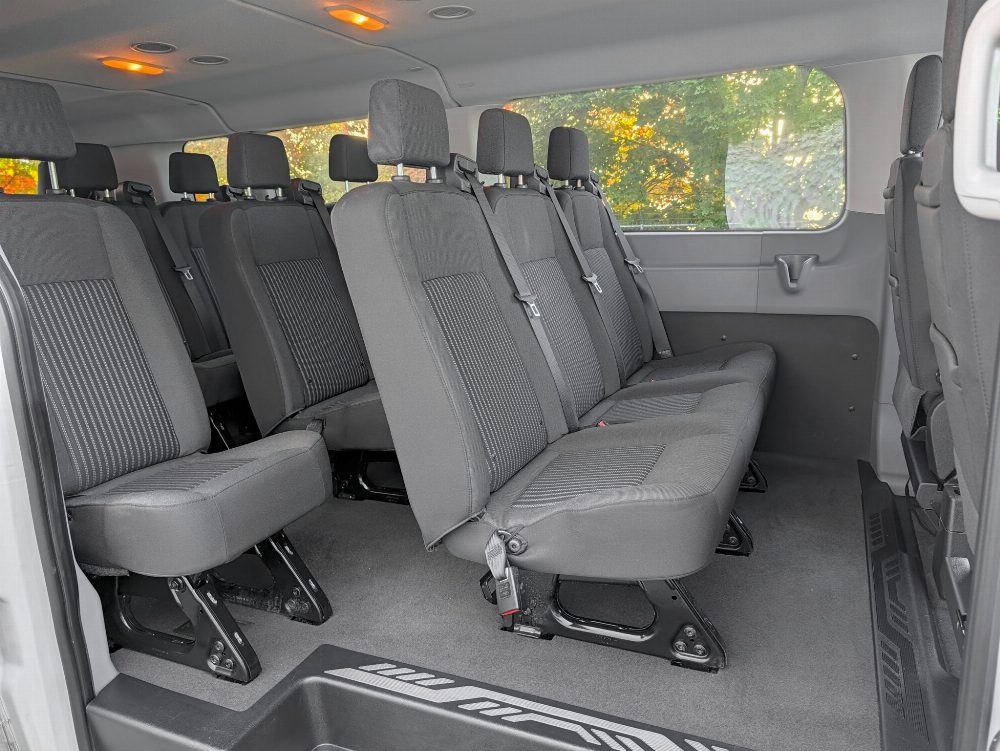
The listing also records air conditioning with separate rear controls. That is a recorded feature of this example, not proof of current cooling performance at every seat. Ask for a current demonstration and the controls you would use from the passenger area. Our photographs do not supply a measured luggage envelope behind the last row.
Lift-equipped Transit: the rear opening has another job
The sold 2018 Transit 350 HD archive has gray passenger seating and a rear-mounted wheelchair lift. In the cabin photograph, individual seating surfaces, head restraints and belts are visible beside the entry area. The full vehicle gallery also records the lift platform extended outside the rear doors. Rear access therefore deserves attention independently of the seating count.
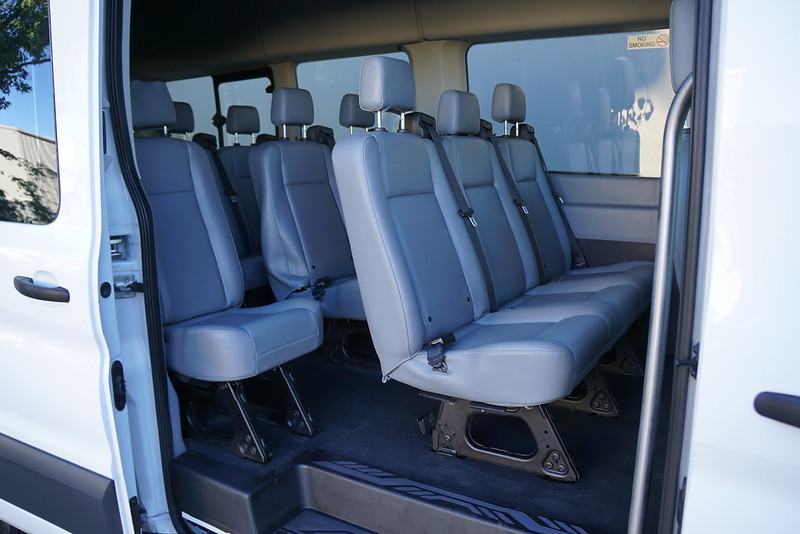
Do not infer a usable wheelchair position, tie-down arrangement, luggage capacity or compliance approval from the lift’s presence. Ask for the exact equipment identification, measurements, mounting and restraint information, followed by a qualified assessment for the intended passenger and use. The archived photographs are a starting point for those questions.
Conversion van: individual chairs and a rear bench
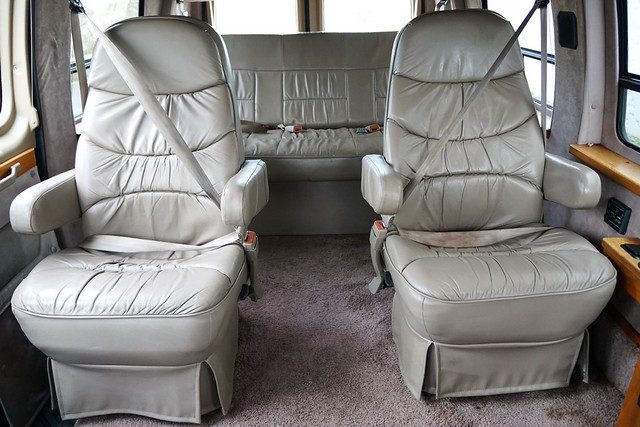
The sold white Ford E-150 high-top shows a different cabin emphasis: beige individual passenger chairs ahead of a rear bench, with wood trim along the sides. Confirm the total passenger capacity of the exact vehicle. It does show why “van” is too broad a description when someone needs a particular seating layout.
Put comparable evidence beside each other
For each candidate, ask for the same set of views: side-door entry, cabin looking rearward, rear opening looking forward and the area behind the final seat. Keep the seats in the intended travel position for the measurement photographs. If a seat can move or be removed, record that separately rather than treating an empty floor photograph as the normal passenger layout.
- Seating: obtain the documented configuration and have the actual mounting and restraint arrangement assessed.
- Luggage: record clear length, width and height with the travel seating in place, including hardware and equipment intrusions.
- Roof height: request a measured interior clearance, not an estimate from an exterior roof label.
- Climate: distinguish controls photographed, equipment recorded and operation demonstrated.
- Mileage and drivetrain: match the dated odometer evidence and the exact vehicle’s documented specifications. A historical indicated reading is not current mileage.
Use the three-vehicle comparison to put the recorded facts beside each other. Unknown fields are marked “Not recorded.” The full galleries remain available from each column.
Ask for the configuration that fits your purpose
Start a private request from the sold lift-equipped Transit, then describe your actual passenger, equipment and access needs. You can specify alternatives and budget without subscribing to every truck or sports-car auction.
Continue with high-top conversion interiors from our archive, sold vans and minivans, or our current and upcoming vehicle pages. These examples help organize a shortlist; they do not replace an independent inspection.
